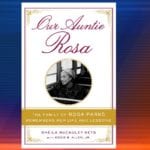
 This is Black History Month and we had the great pleasure of interviewing Rosa Parks’ niece Sheila McCauley Keys for Growing Bolder Radio. Sheila has written a revealing new memoir about growing up with this icon of American history titled, Our Auntie Rosa.
Sheila’s father was Rosa’s only sibling and since Rosa never had any children, she treated Sheila and her brothers and sisters as her own.
“I only knew her as Auntie Rosa until the 4th grade,” Sheila told us. “One day we learned about Rosa Parks in class and she looked just like my auntie so I told my classmates, ‘That’s my auntie.'”
They all laughed in disbelief and made fun of Sheila who raced home after school and learned for the first time that her aunt was, in fact, the mother of the civil rights movement.
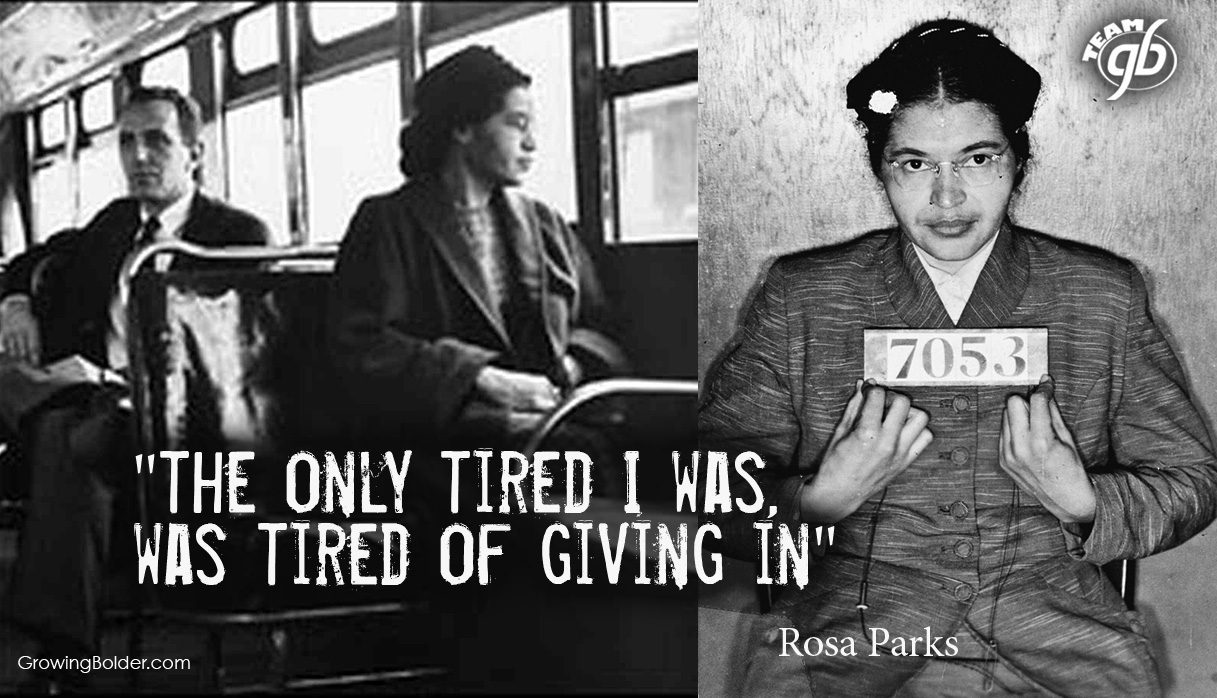
We all know that Rosa Parks was sitting in the “colored section” of a nearly empty Montgomery, Alabama, city bus and refused to move further back when the bus driver asked her to. For years, Rosa’s public persona has been that of a shy, stoic, genteel woman who was simply tired that day and quietly said “no” when asked to move.
 Recently released copies of Rosa’s private journal and Sheila McCauley Keys’ new book reveal a different Rosa Parks — someone far more militant and far more motivated. “She didn’t get on the bus with a plan to make history or ignite a major demonstration.” Sheila says. “Yes, she was tired that day but not physically. She was tired of the Jim Crow Laws. She was sitting in the colored section. When a white man passed up many empty seats to sit in the last row of the white section, the bus driver got up and told her to move further back so there would be more room between her and the white man.” When Rosa refused, the bus driver called the police who arrested Rosa, igniting the 381-day Montgomery bus boycott that eventually led to the Civil Rights Act of 1964 and the Voting Rights Act of 1965. Rosa Park’s simple, single, non-violent act of protest was instrumental in transforming our society.